When considering urban air pollution, road vehicle exhausts are often considered the primary source, and are the target of the ULEZ charge that has now been implemented across the majority of London. The most common pollutants from car exhausts are carbon dioxide and monoxide, nitrogen dioxide and sulphur dioxide, with diesel cars being the worst polluters. Studies suggest that these pollutants contribute 24% of the UK’s greenhouse gas emissions a year, having noticeable effects on human and environmental health, with significant impacts on climate change.


Newer cars that pass the ULEZ criteria still produce these harmful pollutants, but even if to a lesser extent than older vehicles, due to the volume of cars still on the roads, the overall reduction in pollution and improvement in air quality will be minimal. Some suggest that an increase in hybrid and electric vehicles will solve this issue, but as of 2023 there are only 267,000 electric vehicles registered compared to the 2.6 million petrol- and diesel-powered vehicles still on the road. Additionally, the cost of electric vehicles is substantially higher on average than a non-electric car, often limiting access to these vehicles for lower income households, with the cheapest Tesla Model S starting at £86,000. Predictions of when the UK will be completely electric range from 2050 to much later, and until then, all current non-electric vehicles will continue to emit pollutants and hinder air quality improvements unless other methods are put in place to minimise the damage to human health and the environment.
On top of this, increasing the number of electric vehicles within London is not without its challenges, both in terms of cost to the taxpayer and cost to the environment. The Mayor of London is determined to make London a net-zero city by 2030, with a focus on increasing the proportion of electric vehicles within the city. In order to achieve this, first the infrastructure needs to be installed. So far, there have been 10,000 new slow to fast charging points installed across London since 2016. However, in order to achieve the objective of an electric London, a total of 40-60,000 new charging points is required by 2030. If we continue at the current rate of implementation since 2016, this will not be achieved, leaving London behind on its net-zero targets, whilst complications from a warming climate will continue to rise.
 In the event that London was able to hit the target of an entire electric fleet with the infrastructure to support this, the problem of air pollution and climate change would still not be solved. A common myth about electric vehicles is that they are a “green” mode of transport. In reality, this is not the case. Electric vehicles still produce emissions, just not from the vehicles themselves. The electricity required to power them is produced outside of the city, through a mixture of renewable energy and fossil fuels, with the latter still making up 40% of the UK’s energy usage. As much as electric vehicles remove sources of air pollution from the city, they still contribute to the overall impact of global warming, which will affect the climate within cities across the UK, not just London. Additionally, once an electric vehicle has reached the end of its lifespan, it then contributes to an additional form of pollution that other vehicles do not – the battery. The large and complex batteries containing many rare metals are not easily recycled and are often dumped, slowly releasing toxins into the environment over hundreds of years. This is not even taking into account the destructive and polluting mining practices used in order to produce the battery in the first place. In terms of immediate air pollution and improvement to human health within cities like London, electric vehicles are a good step forward. However, until the imperfections are ironed out, there is still the need to implement measures that will continue to assist in the fight against climate change and rising temperatures, which currently electric vehicles still contribute to through the indirect emission of greenhouse gases.
New research has found that other than the gases identified previously, air quality is also affected by smaller particulates called particulate matter (PM), which can lead to severe health impacts and increased mortality from respiratory and cardiovascular disease and lung cancer. The most common of the PM is PM 10 and PM 2.5, which indicates the size of the particle, where the smaller it is the deeper it can penetrate into the lungs and cause more harmful damage. Importantly, the source of PM is not exclusive to vehicle exhaust. New research has assessed the PM produced from tire wear and brake dust when cars hit the brakes. This is equal between electric and non-electric vehicles. This wear produces particulates that can enter the lungs and collect on the sides of buildings, creating a risk to human health as well as a poor visual aesthetic. As these emissions are not from car exhausts and are produced by all current road vehicles, monitoring and reducing this form of pollution is something that ULEZ will be ineffective against, and other methods are required.

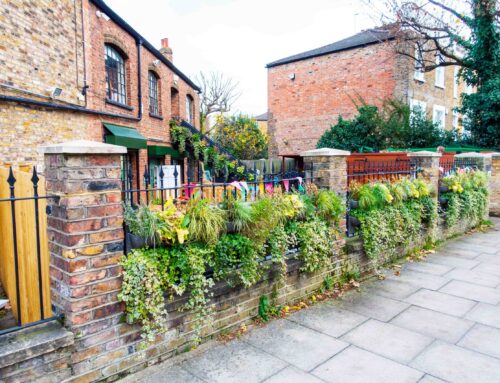
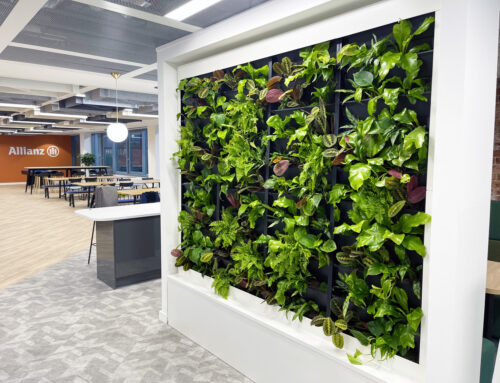
This is where green infrastructure (GI) comes in. Although GI can’t prevent the emission of PM, it can provide an effective barrier between buildings and pollution build-up, as well as reduce the risk of PM entering the lungs. This is done by the unique characteristics of the plants that can be included within GI, like living walls and green screens. One of those plants is Hydra Helix – a type of Ivy. Study of the absorption potential of this plant found that as well as absorbing CO2 through photosynthesis, it is also able to absorb small amounts of other pollutants such as brake dust and tire tread, as well as plastics. It is able to take these pollutants out of the surrounding air and collect it within the plant and deposit it in the soil, as well as collect pollutant dust on the leaves. Hedera Green Screens or living walls with large numbers of this Ivy and other plants with similar characteristics would make a significant effect on PM pollutants, thus improving air quality.
In addition to pollution created by vehicles, London will continue to have other sources of pollution produced by industry and commercial activity, that ULEZ will have no impact upon, adding other greenhouse gases that contribute to the depletion of the ozone and increasing global warming, such as nitrogen dioxide and methane. Large buildings, particularly office skyscrapers that make up the iconic London skyline, have a large carbon footprint, particularly those with glass windows. This is due to the large amount of energy required to heat and cool the buildings, which will only be exacerbated with climate change. In order to provide air conditioning for such large spaces, a large amount of energy is required in order to cool the air, which produces a by-product of hot air that is vented out into the city streets. This hot air does not only increase the street temperature, but emits chemical particles produced within the cooling process, similar to aerosols, which all can contribute to the greenhouse effect increasing global warming. The city is already a heat trap due to heat being reflected and low winds due to many tall buildings, and with increased temperatures predicted due to climate change the effects of this heating are only likely to get worse. By adding green infrastructure in areas around buildings outflow vents, the plants can produce a cooling effect through thermoregulation and their ability to absorb and store heat, as well as capture any excess PM that is produced.
Alongside this, London is constantly developing, with construction work seeming to be happening year-round. The International Energy Agency estimated that about 40% of global carbon emissions comes from the construction, heating, cooling and demolition of buildings. These projects may offset their emissions through tree planting elsewhere, but it has little impact on reducing the pollution directly in London. On top of the emissions produced through heavy machinery, there is a large amount of dust pollution, which can have severe effects to lung health, particularly those in the nearby vicinity of a new development or demolition. Studies have shown that dust, from construction and motorways, can accumulate on plant leaves, preventing it from entering people’s lungs. Implementing green infrastructure within London will minimise the effect industrial and commercial pollution has on human health, and it can be added as a requirement for new developments instead of attempting to offset emissions somewhere far away from the city centre.

In order for London to have cleaner air and meet the WHO criteria (as of 2016 research found no areas of London to meet the criteria), the addition of more sources of green infrastructure would significantly help meet these targets. This would only further assist the Mayor of London reach the 2030 targets he set out with the Environmental Research Group at Kings College London, which is now a legally-binding target. By providing a method of reducing air quality that ULEZ is unable to achieve, it would be a useful addition to compliment the effects of ULEZ, and would come at minimal cost to the public whilst providing long term benefits to both human health and the environment.
The next chapter in this series on “other environmental issues in London”, coming soon. See our website for more information about A Greener London and the various products and services we offer, or follow us on social media:
Facebook: www.facebook.com/agreenerlondon
Instagram: www.instagram.com/agreenerlondon9
LinkedIn: www.linkedin.com/company/a-greener-london
Website: www.agreenerlondon.com
Written by Elliot McDevitt, MSc Environmental Management