London is facing many other environmental challenges beyond air pollution, many of which will increase in impact and societal awareness in the near future. From climate change, reduced water quality in the river Thames, rising flood risk, waste disposal and rising temperatures – these displays environmental risks that will need addressing, with some of the impacts already seen today. Therefore, it is critical that London is prepared for these challenges and begins to strategize and implement solutions today to prevent conditions from worsening.

Many environmental and health concerns seen today, including air pollution, can come under the all-encompassing banner of climate change. The vast release of fossil fuels into the Earth’s atmosphere over the last century since the Industrial Revolution, is now making a measurable difference to the Earth’s climate, and the effects of this are being seen all over the world. The seemingly temperate and rainy city of London is not exempt from these effects, as evidenced by the increase in severe heatwaves seen over recent summers. Whilst there has been a global movement to reduce the use of fossil fuels to slow global warming, such as the increased use of renewable energy sources and the expanding market for electric cars within developed nations, changes to Earth’s climate have already happened and cannot be reversed. This is not to say that continuing with these methods of slowing global warming is pointless, but that while we continue to innovate and change our behaviour, we must also prepare for living in a warmer climate.
 What does this mean for London?
As a highly populated city with millions of people crammed into a relatively small space compared to other megacities, the risk to human health from heat related illness has the potential to surpass that of air pollution.
The summer of 2022 reached the highest recorded temperature since records began, reaching highs of 40.3C. As a consequence, heat related deaths rose drastically to 2,985 across the UK, which was the highest recorded number in any given year. As such, monitoring and finding ways to reduce air temperatures within London is essential, and the solutions can go hand in hand with reducing air pollution.
In the context of comparing ULEZ to Green Infrastructure, they both can be seen as having similar aims – which is to reduce air pollution within London, in turn improving air quality and minimising health risks. This is evidently a critical objective to have, and one the Mayor of London is keen to solve, however despite its significance, it is not the only major environmental issue affecting London, and the world, in 2023. The impact of ULEZ will make some contribution through the reduction of polluting vehicles within the city, as exhausts produce greenhouse gases which are directly causing the warming of the atmosphere. However, ULEZ does not make any difference to the already raised temperatures, and arguably can put more people at risk by encouraging them to take modes of public transport such as the London Underground, which is known for its stifling heat even outside of the summer months.
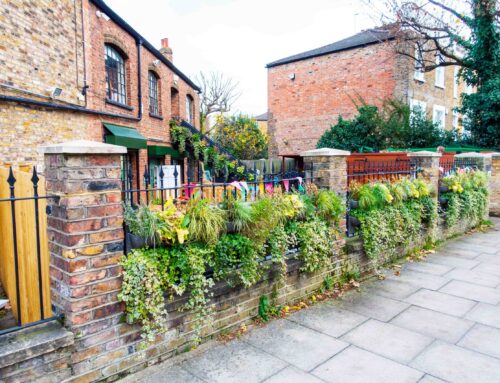
 An alternative approach that can reduce air pollution as well as provide a cooling effect would be through green infrastructure.
Plants have the ability to absorb greenhouse gases and store them in the soil, and by this process they are able to provide a cooling effect through the process of evapotranspiration that can be hugely beneficial during summer.
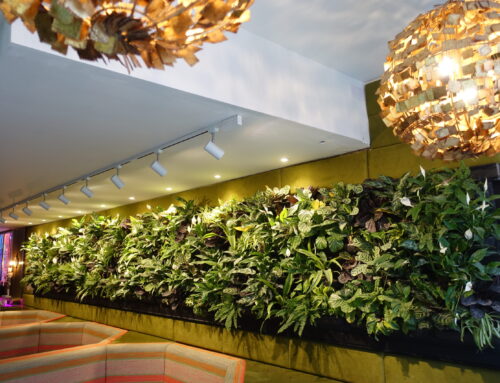
Research conducted by N.Wong in 2010 found that a cooling effect of 3.33C lower than the surrounding temperature could be felt as much as 0.60m away from a living wall. If living walls are placed throughout London, particularly at lower levels, the street temperature would be significantly reduced, providing better conditions for pedestrians, particularly during heatwaves. Additionally, green roofs have been found to produce a significant cooling effect for buildings, reducing ambient temperatures and decreasing the cost of cooling, for both small residential buildings up to large apartments and skyscrapers.

The impact of the heating and cooling of commercial and industrial buildings has been mentioned as a contributor to climate change and poor air quality in Chapter 2. By reducing the energy requirements of these buildings, pollution levels will be reduced as well as the economic costs. Installing green roofs would allow both these outcomes to be achieved.
A 2019 study found that a green roof can provide thermal insulation to the buildings they are placed on, reducing internal temperatures by as much as 10C and reducing overall building energy consumption by up to 20%. This is due to the cooling effect of the water, soil and shade provided by green roofs in direct contact with the building.
As an additional bonus, green roofs not only help us, but are a safe haven for nature within our cities, often being referred to as “bee cities”. Bees are essential to the environment due to their ability to pollinate, help plants grow and produce food. However, bees are at risk of extinction largely due to human activities – large-scale changes in land use, industrialised agricultural practices and the detrimental use of pesticides have all contributed to destroying their habitats and reducing their available food sources.
As green roofs would be secluded from public access and the busyness of the street, bees and other pollinators are able to thrive in these spaces, increasing urban biodiversity and allowing a space for nature to recover. Therefore, it is clear that investment into green roofs can improve biodiversity and nature, as well as the climate and public health, with the additional potential to be an economic advantage through energy savings.
 Another consequence of climate change, combined with a constantly developing city like London, is the challenges faced by nature and our native wildlife. Although not essential to human health, nature has been found to have profound benefits to human mental and physical health, even through observation alone. Additionally, many animals and insects that are increasingly pushed out of our towns and cities are crucial to our way of live, since we have been co-habiting with them since civilisation began.
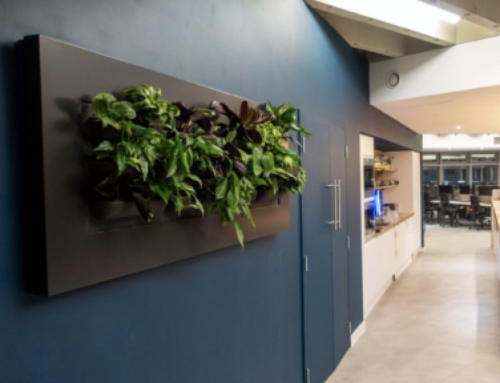
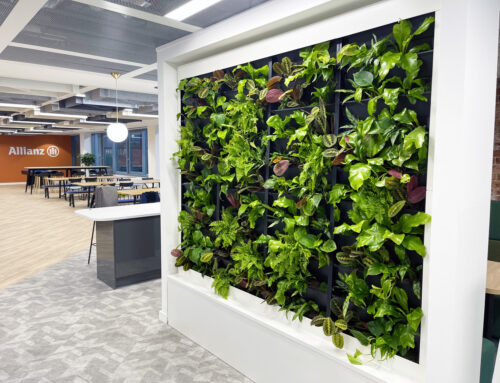
One essential benefit of living walls is at the core of their concept: they are bringing nature back into the city, which in turn improves urban biodiversity. Living walls can support an entire ecosystem through the range of plants that can be used within them. The soil and plants provide habitat for essential insect species, which provide food for local bird species.
The systems themselves are often an ideal location for birds to make a nest and have a safe space to raise their young. And of course, any flowering plants provide a source of nectar for bees, which have experienced significant population declines over the last few decades. Bringing nature back into the city is not only essential for wildlife, but can be hugely beneficial for people.
Studies have shown that the presence of greenery can reduce stress and provide a relaxing break from the busyness of modern life. Living walls can be placed on almost any flat building wall, so the benefits of placing them in central business districts could be invaluable to those who work there, often inside for long hours. Stress and anxiety are increasingly the cause of reduced working hours and NHS care, so any effort to reduce this should be considered as an important investment for Londoners.
Climate change, biodiversity and human health are all linked. The concept of ULEZ focuses on one side of a multi-faceted problem, however green infrastructure can provide benefits across multiple issues, and should be considered by the UK government as an effective solution for both people and the planet.
See our website for more information about A Greener London and the various products and services we offer, or follow us on social media:
Facebook: www.facebook.com/agreenerlondon
Instagram: www.instagram.com/agreenerlondon9
LinkedIn: www.linkedin.com/company/a-greener-london
Website: www.agreenerlondon.com
Written by Elliot McDevitt, MSc Environmental Management