Air quality in London has been a rising concern since the Industrial Revolution in the early 1800s, where mechanisation of industry processes and the increased use of motorised vehicles began to occur. Rising levels of harmful airborne pollutants have directly caused illness and death, and is still a concern today. The World Health Organisation (WHO) defines air pollution as “the contamination of the indoor or outdoor environment by any chemical, physical or biological agent that modifies the natural characteristics of the atmosphere.” Those identified as causing the most harm to human health and the environment are “particulate matter, carbon monoxide, ozone, nitrogen dioxide and sulphur dioxide”, many of which are produced from car exhausts due to the combustion processes of the engine. With over 2.6 million cars in London and over 4000 deaths from air pollution related illness, action is needed to clean London’s air.
What is the best method for improving air quality across London?
The Mayor of London’s most recent response to this issue is the implementation of an Ultra-Low Emission Zone (ULEZ), with the aim to reduce the air pollution produced by vehicles. In 2023, the zone has been expanded to encompass the majority of London within the M25. The theory behind ULEZ, is that by introducing a fine for higher emitting cars, it will discourage drivers from travelling by car in London. These include petrol cars registered before 2005 and diesel cars registered before 2015. However, this has been a widely controversial decision, due to the cost to residents and the debated effectiveness at actually improving air quality. Supporting this argument, Imperial College London conducted a study on the initial implementation of ULEZ in 2019. They found only a 3% reduction in some of the toxic gases produced by car exhausts like Nitrogen Dioxide identified by the WHO across all of London. These figures are a likely result of the fact that even with ULEZ, cars can still enter and drive through London, just with an added cost, and no method of actually removing the pollutants. This cost of £12.50 a day is often paid by lower income households that work in London and can’t afford a new car, or by the millions of business delivery, and tourists journeys coming into London every year. The issue with ULEZ is that it is attempting to reduce the source of pollution but is failing to tackle the problem of the pollution that is already there and being continuously produced.
This is not the first occasion London has attempted to reduce the source of pollution as an attempt to improve air quality. In 2003, we saw the introduction of the Congestion Charge Zone in Central London, as well as in 2020 a huge increase in the designation of Low Traffic Neighbourhoods (LTNs). Before ULEZ came into place, a less strict, Low Emission Zone had already been put in place as well. All these past methods, in a similar way to ULEZ, aim at reducing public vehicle use in certain areas of the city, hoping to reduce pollutants in the air, often at a cost to the public. Despite these efforts, London has not seen a significant decline in air pollution levels, with public health still at risk in 2023. Not only this but there has arguably been an increase in congestion, thus pollution, in certain areas as a result ofsome LTNs. On the one hand, this lack of improvement is due to the fact that these methods are aiming at limiting emitting vehicles, but this is not limiting and can be bypassed by paying a fee. On the other hand, the only target is on public car use, but this is not the only source of emissions in London. One of the largest sources of pollution in London comes from air travel, which has not been reduced or taxed anywhere near to the extent of cars. This is despite the fact that research by the BBC found that one flight from Heathrow to Edinburgh emits the same amount of CO2 as 336 cars taking the same journey. Even though London Heathrow has been included in the new 2023 ULEZ area, it is still just the cars being fined and not the highly polluting aircraft. It would be necessary to implement more green infrastructure around these high emitting areas to store the carbon rather than let it enter the atmosphere, especially as it is looking unlikely the airline industry will be changing any time soon.
In London’s current situation, many sources of pollution still exist with few methods to remove it directly. The areas with the cleanest air in London are actually within the parks, not the areas with new ULEZ cameras. Places like Richmond and Hyde Park are massive carbon sinks for London, absorbing vast amounts of carbon dioxide daily through the method of photosynthesis in the trees, plants and grasslands. The effect of nature and green spaces can also be seen on a much smaller scale. New research compared the air quality of a pavement with a grass verge separating it from the road and a pavement directly adjacent to the road. Even with a 0.5 metre grass verge, the pollutants measured were significantly reduced compared to a pavement without any green barrier. In combination with ULEZ, green spaces are able to reduce air pollution through cleaning the air directly by their natural process at no cost to the public. However, even with the reduction in vehicle traffic across London due to ULEZ, the amount of green space is not enough to match the emissions from the remaining vehicles.
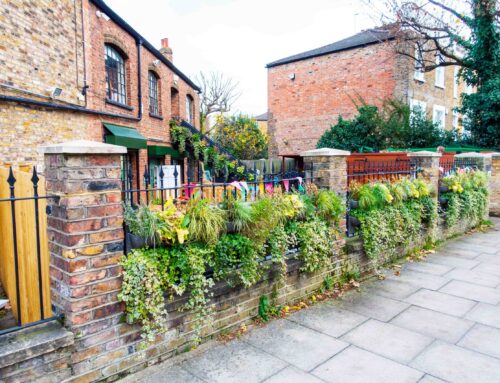
Green spaces can be highly productive carbon sinks, and whilst London has some of the most parks in Europe, they are limited to their geographical area in terms of how much carbon they can sequester. Certain areas of London, such as parts of Croydon or Central London, do not have much green space, and consequently have higher reported levels of air pollution. It is obvious that building new parks and green spaces in London is an almost impossible challenge with the current cost of land and property. Green infrastructure provides an opportunity to bring green spaces into towns and suburbs that were previously lacking. There are multiple options when considering implementing green infrastructure, including green roofs, living walls and green screens, all of which are suitable to specific environments.
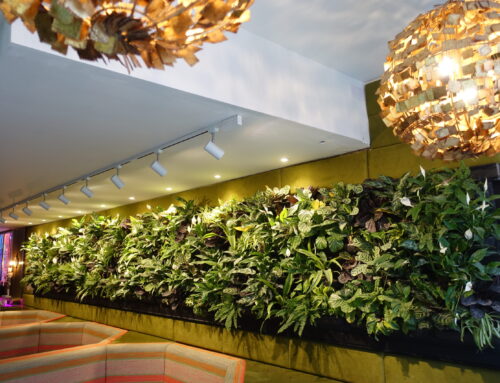
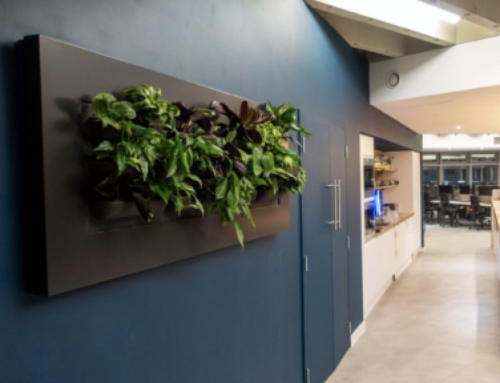
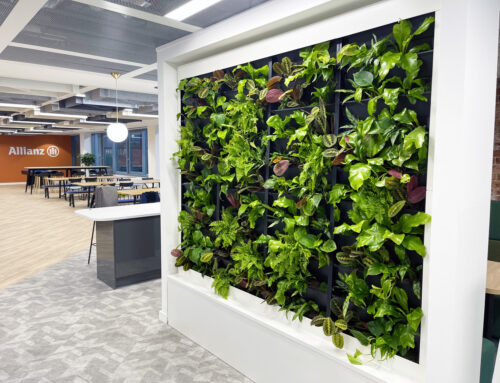
Living walls are vertical green spaces that can be applied to the side of buildings, across a range of scales, including around windows. These walls offer an opportunity to bring nature into the urban environment, whilst at the same time significantly reducing air pollution levels. A varied mix of plant species with different pollution absorption coefficients can significantly improve the air quality around the vicinity of where they are installed. Not only that, but living walls provide numerous other benefits to human and environmental health. Similar in intent, green roofs, as the name suggests, are areas of flat rooftop seen on high-rise apartments and office buildings, that have been converted into a green space. Often these areas are inaccessible to the public, as they are not creating a rooftop garden, but instead an area with a mixture of plants that maximises air quality improvements and biodiversity gain. More information on this will be available in future chapters.
These forms of green infrastructure provide an option that can be implemented in many areas across London and can fill the gap in controlling pollution that ULEZ fails to do. If the government want to make an even larger impact on air quality, they should consider investing in more of these developments across the city or reinvesting the profit from ULEZ to do so. Where ULEZ focuses on reducing the source of pollution, green infrastructure can deal with the existing pollution from vehicles allowed within ULEZ and other polluting sources. Through the combination of these methods, it is likely that a more significant decrease in pollutants in London’s air will be found, in turn improving public health and wellbeing, as well as providing a haven for nature among the busy London streets.
The next chapter in this series on “other pollutants and environmental damage to London”, coming soon. See our website for more information about A Greener London and the various products and services we offer, or follow us on social media:
Facebook: www.facebook.com/agreenerlondon
Instagram: www.instagram.com/agreenerlondon9
LinkedIn: www.linkedin.com/company/a-greener-london
Website: www.agreenerlondon.com
Written by Elliot McDevitt, MSc Environmental Management