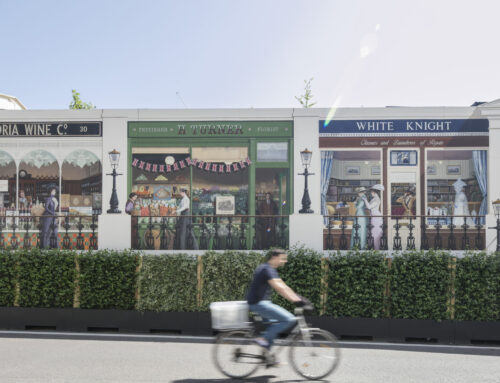
After extensive research via our global suppliers, independent data sources, Imperial College of London’s research and government reports, we have reached the conclusion, that yes initiatives like ULEZ, LTNs and congestion charges will make some impact in reducing air pollution. However, the effect will be minimal and it will take years for significant changes to occur, without reducing other forms of urban pollution not produced by vehicle emissions. With the increasing threat of climate change and the damage pollution causes to human health, it is essential that these initiatives are used in conjunction with other measures like implementing more Green Infrastructure. Profits made by ULEZ should be reinvested into this technology, creating a network of green areas that both produce clean air and remove a variety of pollutants.

But still this likely would not be enough, change also needs to come from the public, businesses, and the motor and airline industries. In order to create effective positive change, the government should consider methods of incentivisation rather than penalisation, of which the latter they are currently more in favour. In Germany, they have tried incentivising its citizens to use public transport as opposed to punishing motorists with fines/tolls. Following the success of a heavily subsidised €9 national public transport travel pass trial in 2022, they have permanently introduced a €49 travel pass, valid on most forms of public transport. National travel pass schemes like this seem to have greater impact as well as proved more popular, and they reduce the number of cars on the road without the heavy costs of setting up and monitoring systems like ULEZ. By incentivising instead of penalising, national vehicle pollution can be reduced without harming financially essential travel users like the elderly, disabled and business travellers.

The UK government can begin this approach of incentivisation through implementing more types of green infrastructure. By providing examples via profits made from ULEZ, the government can demonstrate the effectiveness of green infrastructure at reducing emissions, as well as display the benefits to the public of improved mental wellbeing, cleaner air, and improved biodiversity, encouraging private investment. Additionally, it will show businesses how green infrastructure can provide energy savings through thermal insulation as well as reducing a company’s carbon footprint, which is now seen as a positive factor for stockholders.
Green Infrastructure can complement the goals of ULEZ, through improving air quality, whilst at the same time providing a myriad of other benefits that incentivise rather than penalise taxpayers and visitors to the UK’s capital. Importantly, creating these environments across London provide a host of benefits to the public, without charging them for this service, and through minimal maintenance, once installed these installations can last for decades, consistently cleaning London’s air and improving overall quality of life for generations.

Investing in Green infrastructure – A Greener London
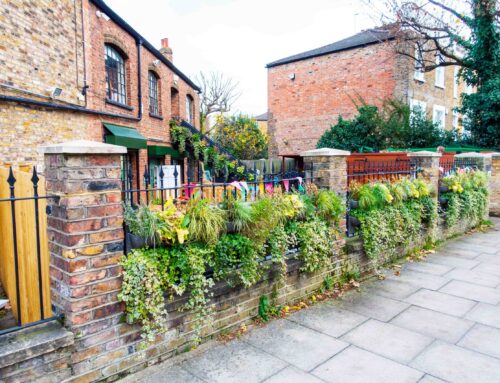
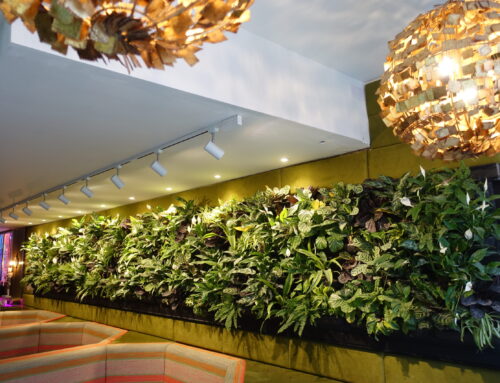
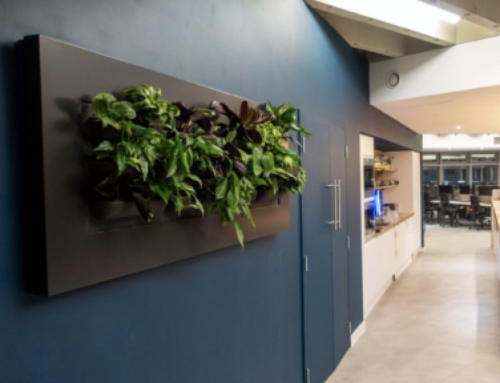
The core types of green infrastructure that A Greener London provides, includes living walls (both internal and external), green roofs, moss walls, green screens, biophilic planters etc.
Each type has its own unique advantages and disadvantages, mostly relating to the suitability of its implementation. The benefit of having such a range of options is that it allows for some form of green infrastructure to be implemented across almost any scale in any type of built urban environment. For example, certain government or office buildings may have a complete glass covered wall, as is becoming more typical within London developments, which would make the construction of a living wall impossible. However, if that same building had a flat roof, or perhaps an unused space in the courtyard, a green roof or planter could be applied. The adaptability of different green infrastructure designs allows for the potential for much larger areas of London to be converted and improved for the benefit of public health and the environment. See each section below for each service provided by A Greener London, with their specific benefits, application, and costs.


Living Wall Features & Benefits
- Internal & external use
- Substrate, free draining peat free
- Fully automated or manual irrigation system
- Wide range of plants species with strains for great environmental/pollution reducing qualities
- Great aesthetically & for health well-being


Green Roofs Features & Environmental Benefits.
- Modular system & easy to install
- Pre-grown with a choice of wildflowers or sedum varieties
- Great for Biodiversity & pollination, providing a safe haven for birds & insects
- Works as a natural heat & sound absorber as well as insulator
- Reduces environmental footprint of a building

Green Screen Features & Environmental Benefits.
- Biodegradable pot of coconut fibres
- Instant privacy and greenery and security with a range of thorny plant choices
- Easy, cheap and fast to install
- Plant species chosen to improve air quality and reduce fine dust with the Hedera range
See our website for more information about A Greener London and the various products and services we offer, or follow us on social media:
Facebook: www.facebook.com/agreenerlondon
Instagram: www.instagram.com/agreenerlondon9
LinkedIn: www.linkedin.com/company/a-greener-london
Website: www.agreenerlondon.com
Written by Elliot McDevitt, MSc Environmental Management